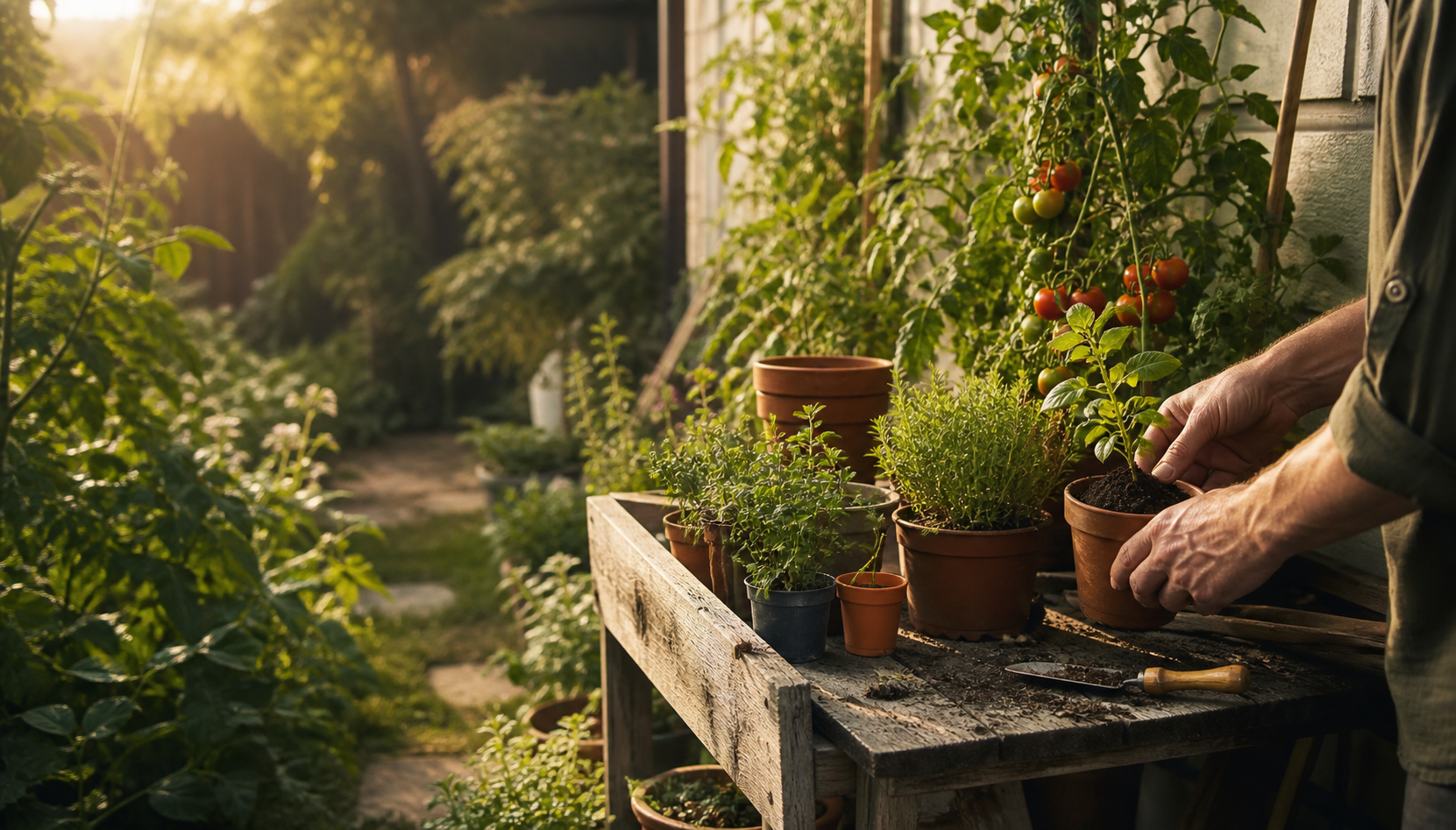
Notice before you change
Take a handful of moist soil and feel its texture. Does it hold together, fall apart, smell earthy, or stay waterlogged? Watch where water pools and where plants already grow well. These observations are more useful than guessing from colour alone.
Feed the soil surface
Add a modest layer of mature compost around established plants and over empty beds. Organic matter supports soil organisms, improves water handling, and returns nutrients gradually. Keep compost and mulch away from stems and trunks.
Think in layers: soil, compost, then a breathable mulch. Let worms and roots do the mixing.
Keep living roots where possible
Roots protect soil structure and feed microorganisms. Between main crops, consider a suitable cover crop or a quick edible green. In ornamental beds, ground-covering plants can reduce bare soil and repeated weeding.
Use amendments with evidence
Before adding lime, sulfur, or concentrated fertiliser, use a reliable soil test and follow label directions. More is not better. Local horticultural guidance is especially valuable when soil contamination, salinity, or persistent drainage problems are possible.