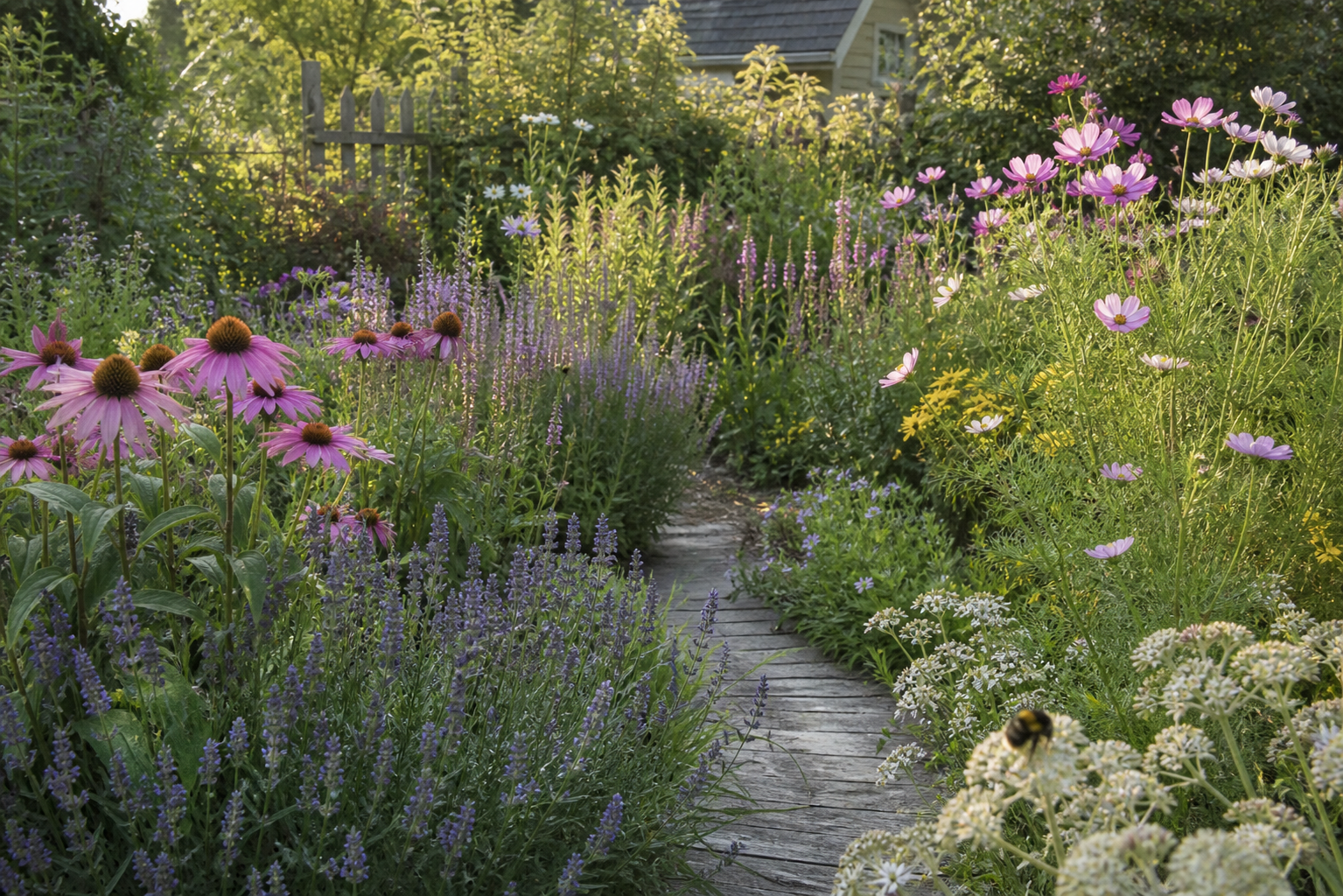
Plant for a long season
Choose several plants with overlapping bloom times so something is flowering from early spring into autumn. Native or regionally suitable plants often support local insects especially well; a local nursery can help you choose species that fit your climate.
Grow in generous groups
Repeating one flower in a small drift or container makes it easier for pollinators to find. Herbs such as thyme, mint, chives, and oregano become valuable nectar plants when some are allowed to flower.
A slightly untidy corner can be a rich habitat: hollow stems, leaf litter, and seed heads all have work to do.
Offer water and shelter
A shallow dish with clean water and a few stones gives insects a safe landing place. Refresh it often. Leave some bare, well-drained soil for ground-nesting bees and avoid blocking every gap with decorative material.
Be careful with treatments
Start with physical and cultural controls when pests appear: hand removal, healthy spacing, and choosing the right plant for the spot. If a pesticide is necessary, follow the product label exactly, never treat open flowers, and consult local guidance because approved uses vary by location.